Anthropic’s Dominance
Anthropic has not only won but has done so decisively!
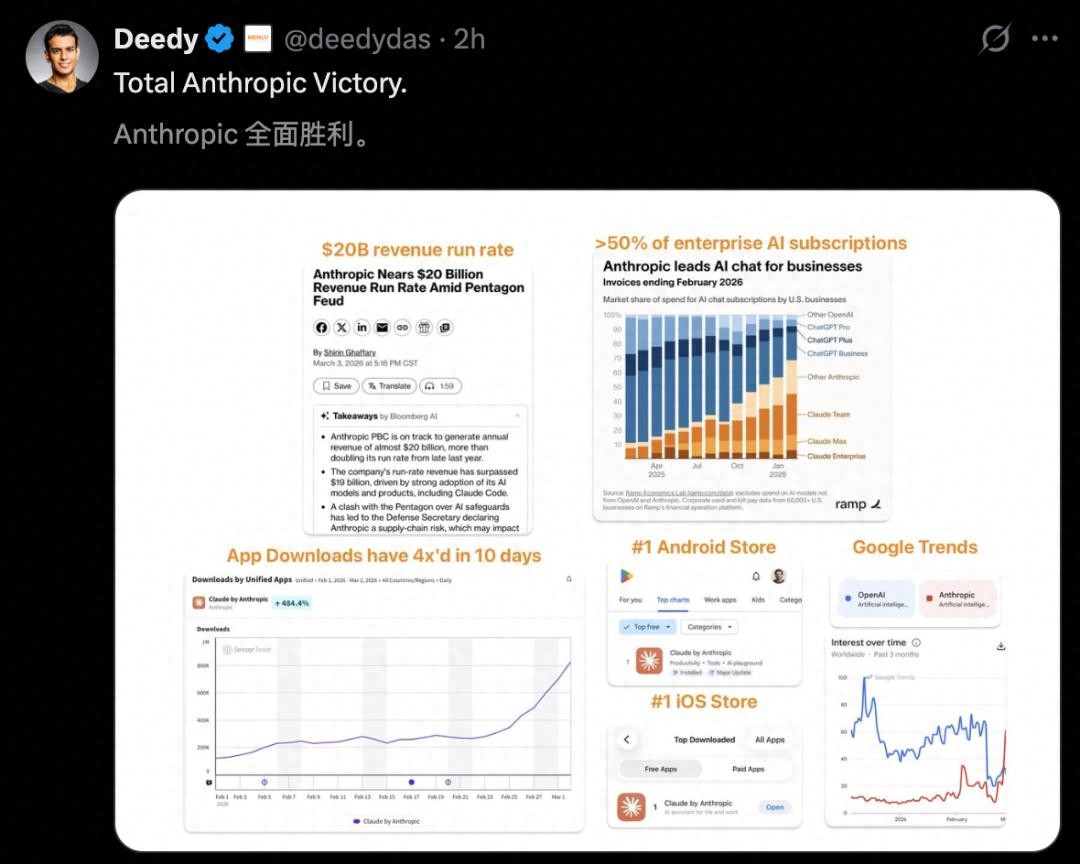
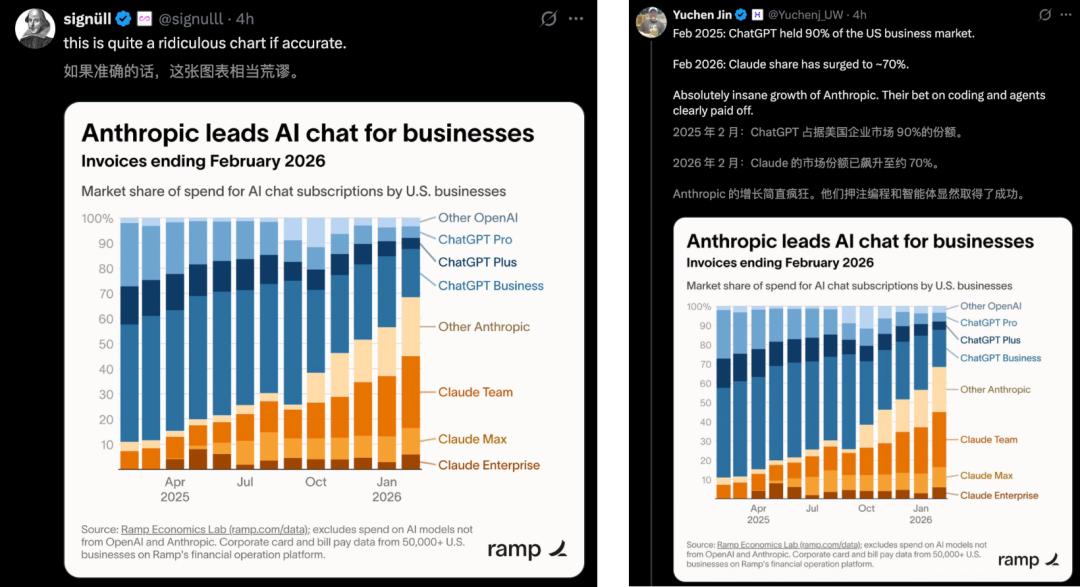
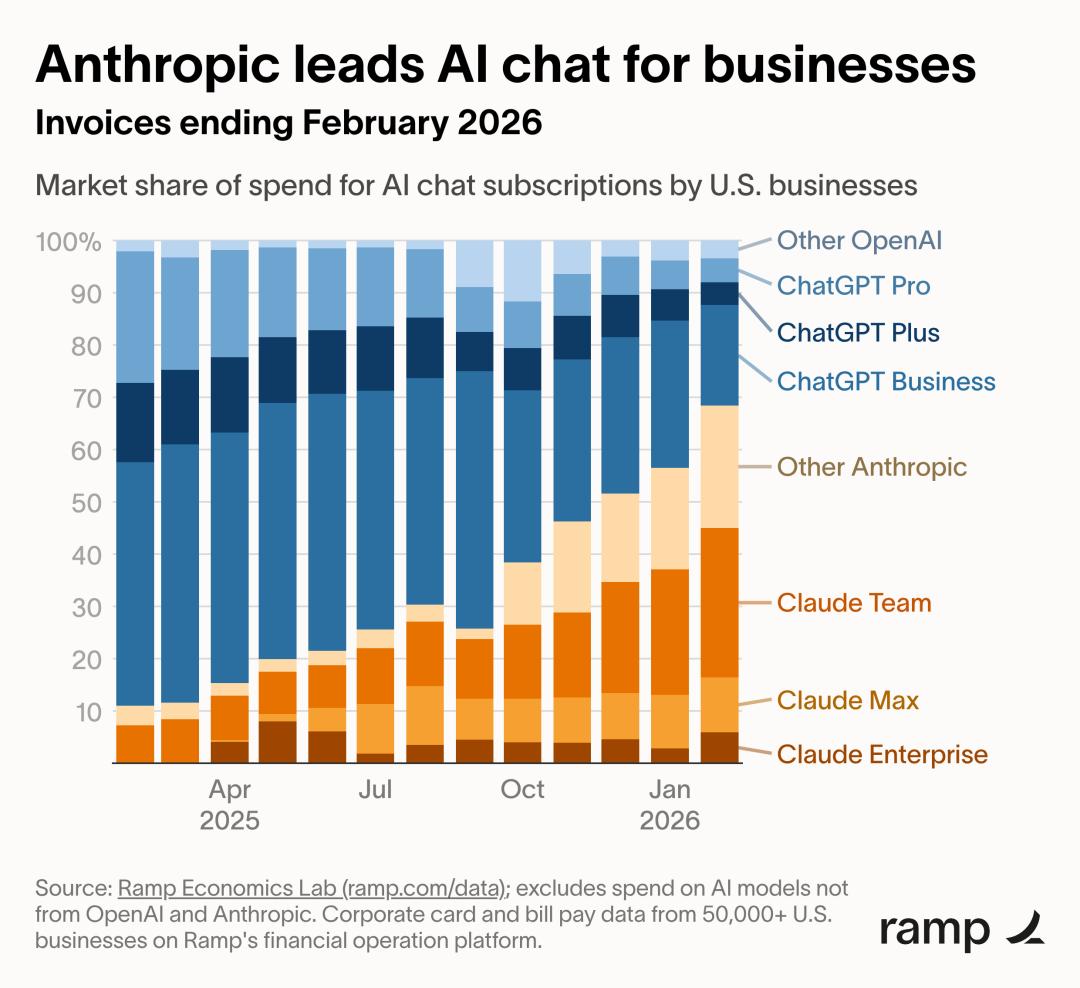
In February 2026, Anthropic’s market share in the U.S. surged to nearly 70%, quickly surpassing OpenAI.
In just one year, ChatGPT’s original 90% share has been largely consumed by Claude.
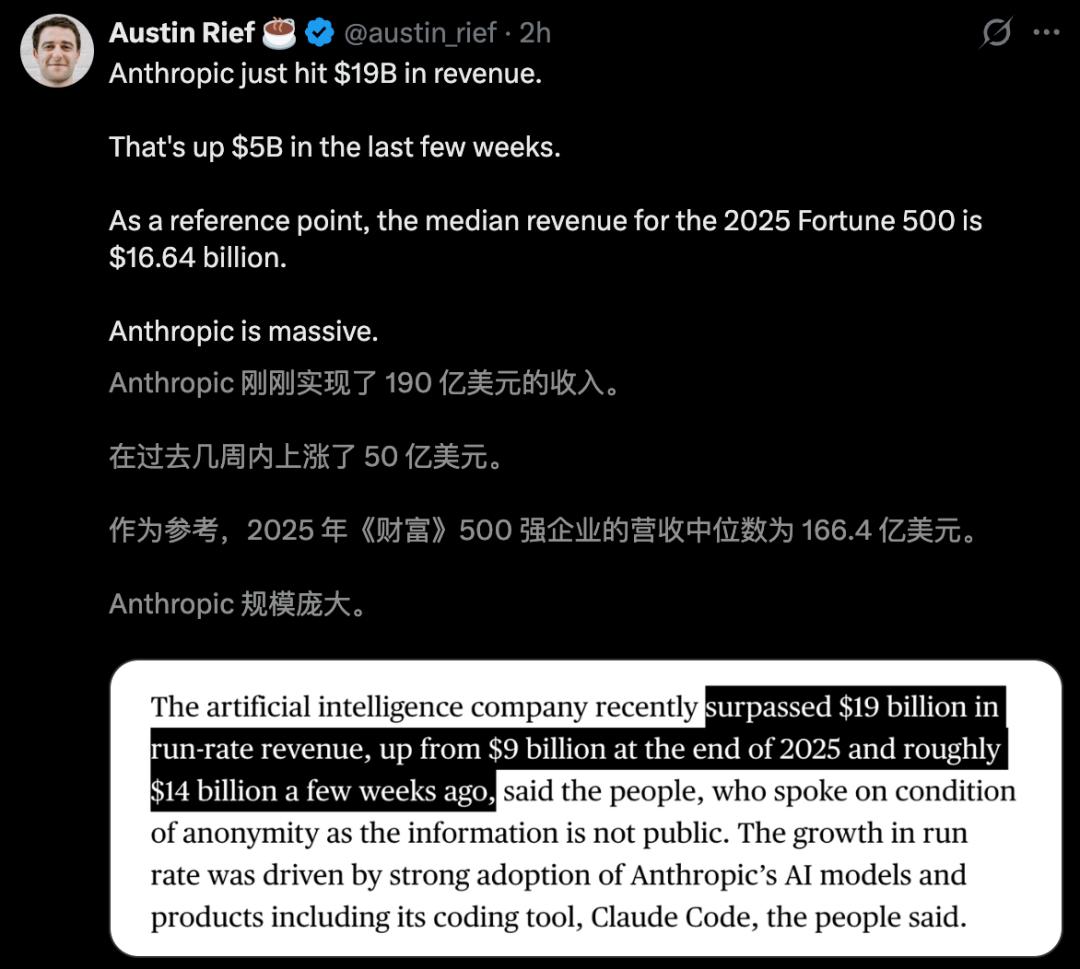
Even more astonishing, Anthropic’s annual revenue (ARR) has set records, nearing $20 billion.
In just two weeks, it skyrocketed by $5 billion!
Using the median revenue of $16.64 billion from the Fortune 500 as a reference, one must marvel at Anthropic’s immense scale.
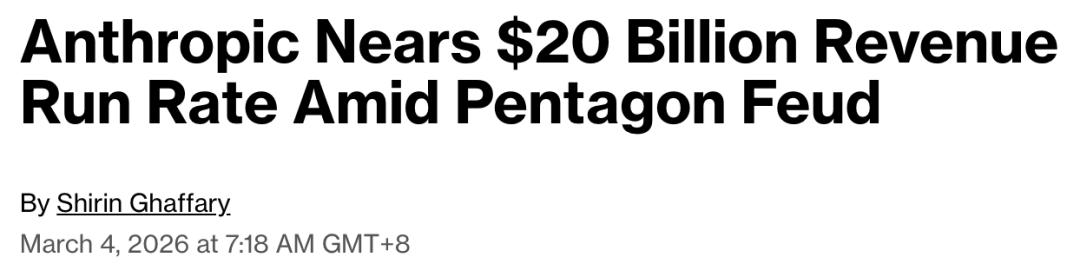
Annual Revenue Doubles to $20 Billion
Anthropic’s revenue performance is truly surprising, especially as it has become the top company currently banned by U.S. government agencies.
It is in a situation that is “half sea water, half fire.”
On one hand, Anthropic’s ability to generate revenue is astonishing.
Dario Amodei revealed in a meeting that the company’s run-rate revenue has surged to nearly $20 billion.
This is more than double the $9 billion at the end of last year. Looking at a larger time span, the speed of revenue doubling is enough to leave one speechless.
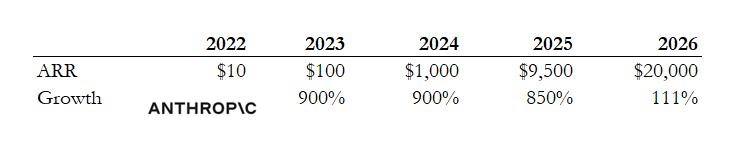
This insane growth is primarily attributed to Claude’s powerful performance.
Especially since the beginning of 2026, Claude Code unexpectedly became a hit, and flagship Opus 4.6 transformed Claude completely.
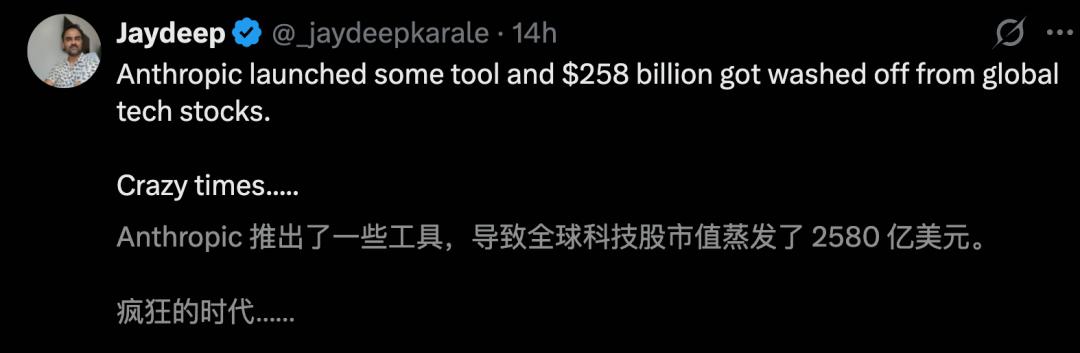
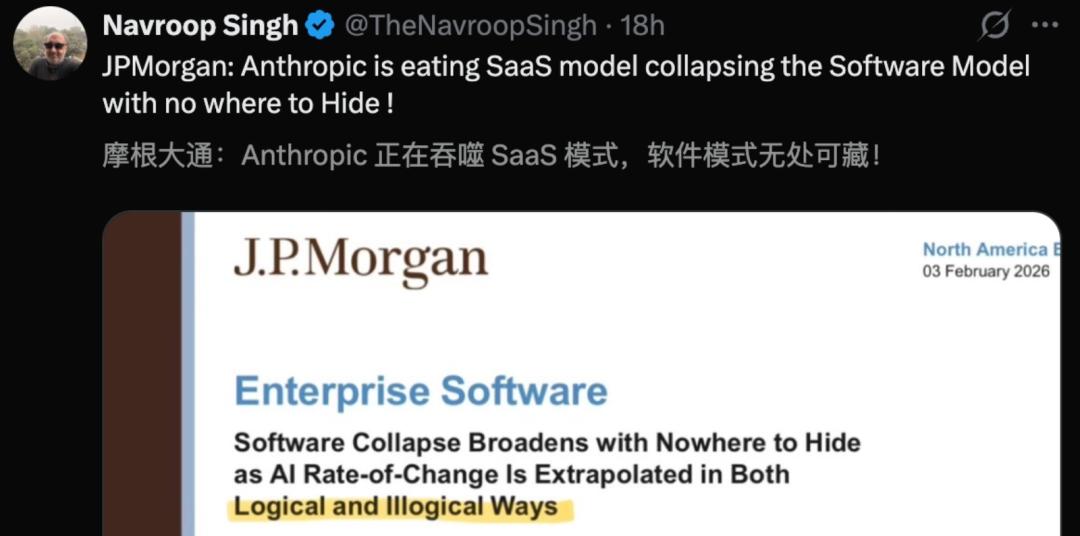
In February, Claude Cowork was released, along with updates to a dozen plugins, causing a massive crash in global software stocks, with nearly $1 trillion in market value evaporating.
Last month, Anthropic also announced a new round of $30 billion in financing, pushing its valuation to a peak of $380 billion.
At the same time, an impressive report was released, sending shockwaves through Silicon Valley—
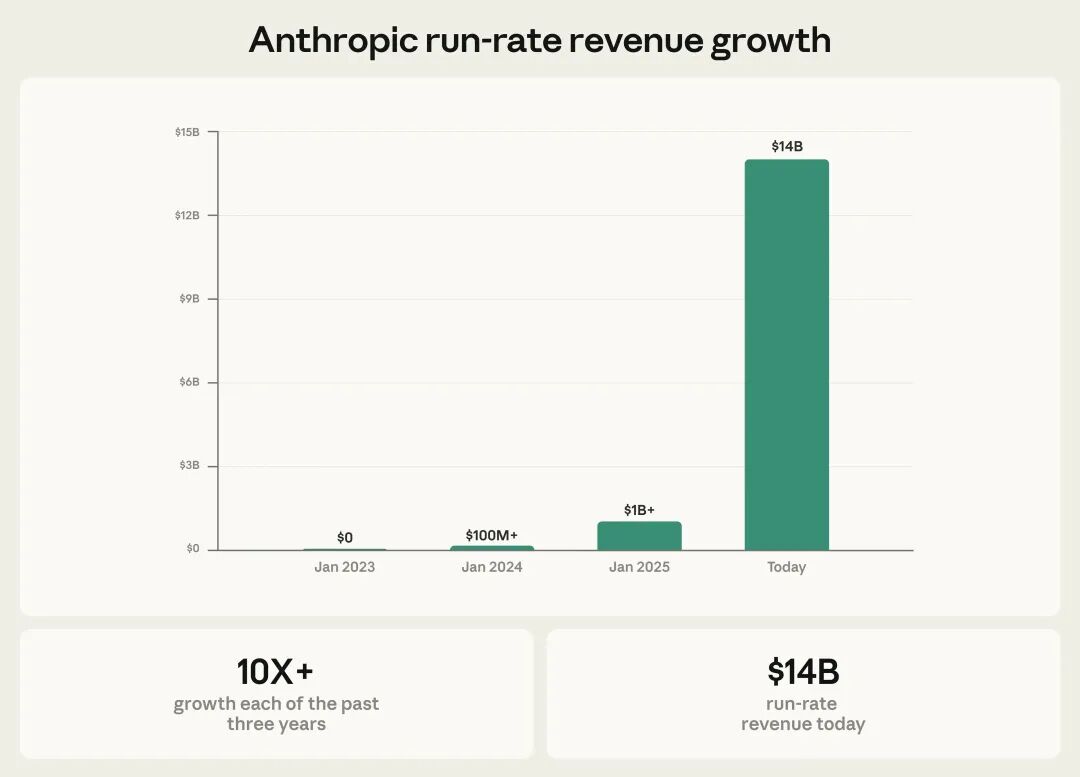
Its run-rate revenue has surged to $14 billion, achieving over tenfold explosive growth for three consecutive years.
More dominating data lies in enterprise penetration rates.
In the past year, the number of clients spending over $100,000 annually on Claude has increased sevenfold; clients spending over $1 million annually have surged from a few dozen two years ago to over 500 now.
Among the top 10 Fortune 500 companies, 8 have become loyal users of Claude.
Just Claude Code, which launched its Agent programming tool last May, has already surpassed $2.5 billion in run-rate revenue.
With its smooth programming experience, Claude Code has garnered rave reviews within the developer community.
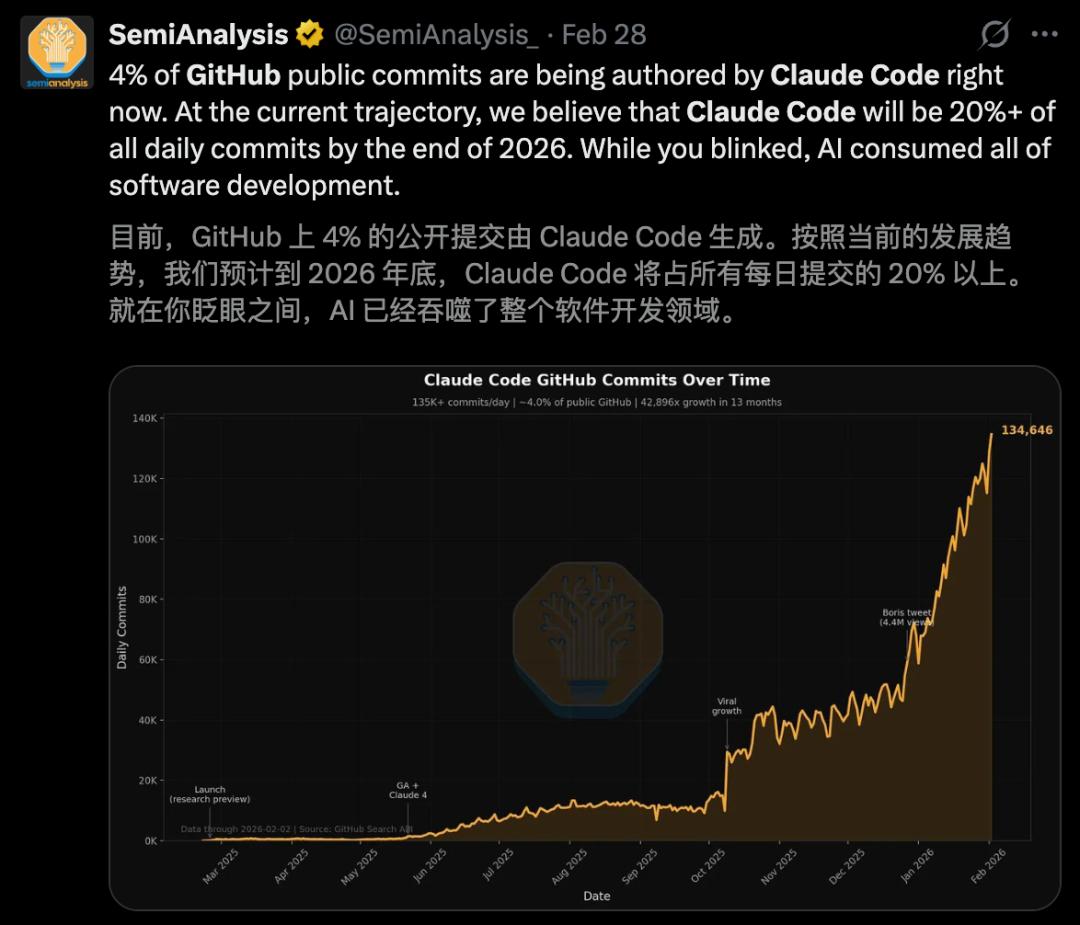
A stunning analysis shows that 4% of public code submissions on GitHub are automatically generated by Claude Code, and this proportion doubled within a month.
Now, Claude Code has become an essential AI tool for many companies, deeply integrated into workflows.
Major players like Shopify, NASA, Figma, and Stripe are all lining up to pay Anthropic.

Comprehensive Victory
As netizen Deedy stated, Anthropic is achieving a “comprehensive victory.”
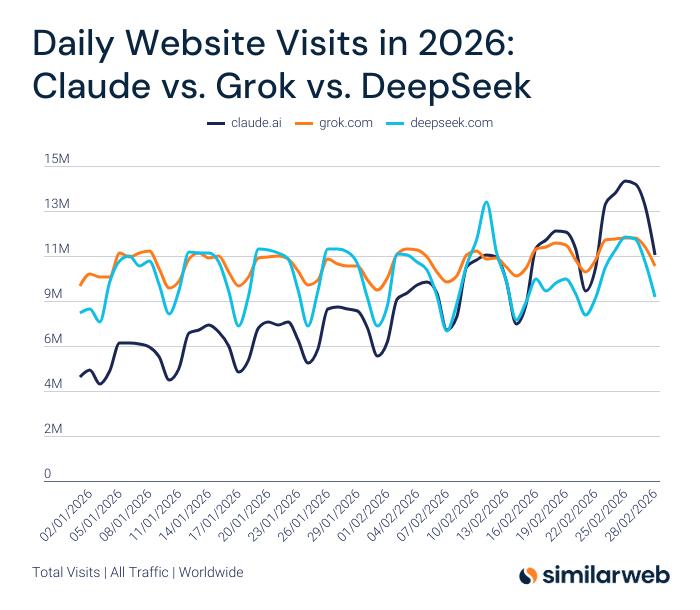
Similarweb’s latest statistics show that Claude.ai is accelerating rapidly in the second half of February, far surpassing Grok and DeepSeek in traffic.
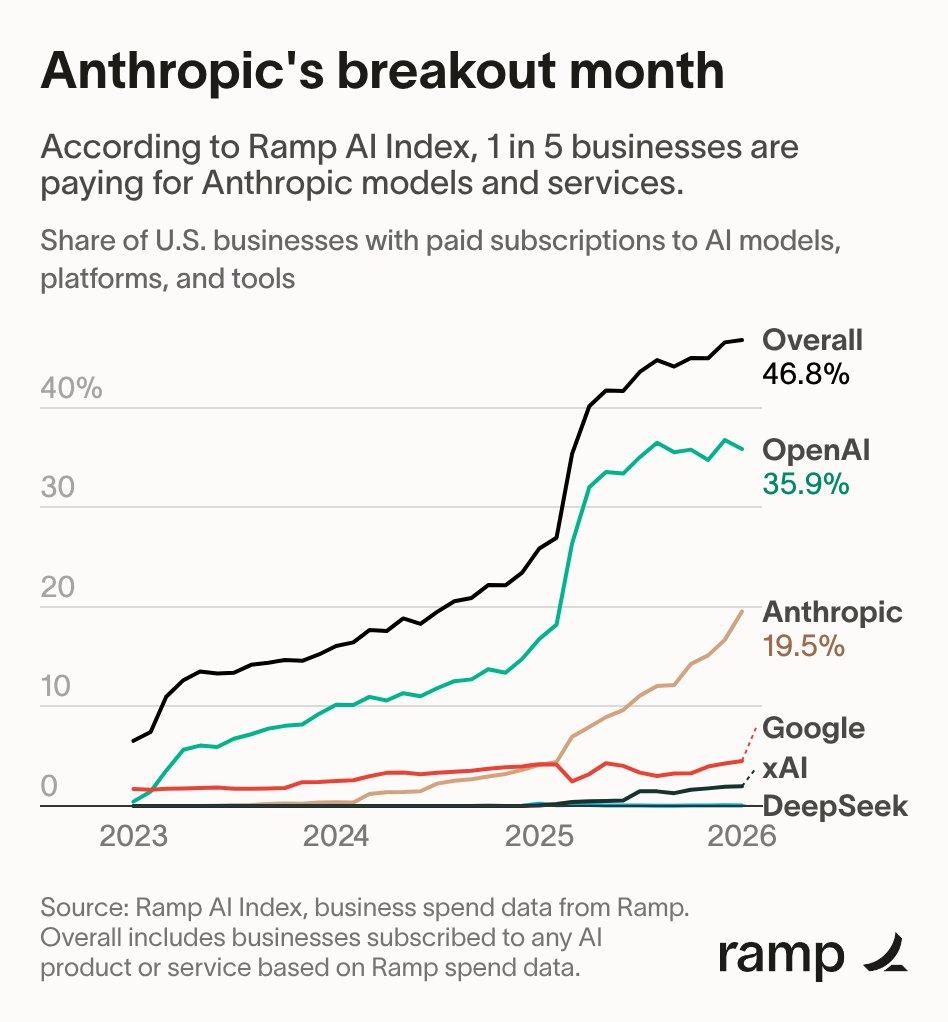
The latest Ramp AI index indicates that Anthropic’s enterprise coverage has surged from 16.7% to 19.5%, while OpenAI has dropped to 35.9%.
Among every five enterprises, one is paying for Anthropic. A year ago, this ratio was 25:1.
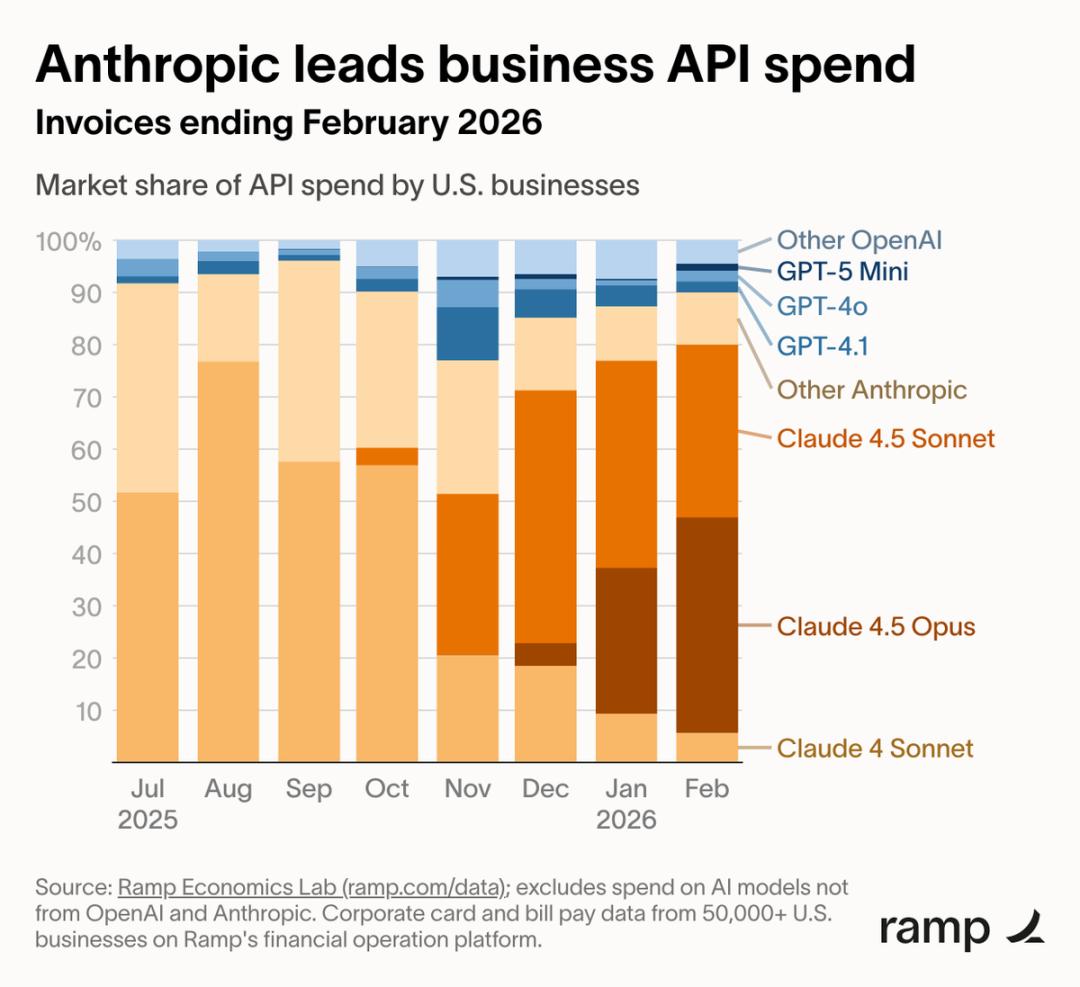
In terms of API spending, Anthropic has captured 90% of the market share, sweeping all before it.
Moreover, while confronting the Pentagon, Anthropic has also garnered a surge in traffic.
On download charts in Google Play, the U.S., Canada, and France App Store, the Claude app is far ahead.

However, amidst this capital frenzy, Anthropic has hit a “iron plate”.
By insisting on “never compromising” on AI safety standards, it has sparked intense conflict with the Pentagon, ultimately leading to a ban from Trump.
U.S. Secretary of Defense Pete Hegseth has classified it as a “supply chain risk,” severing government business ties with it—
While Anthropic’s commercial prospects are overshadowed, many other related companies are also affected.
Break with the Pentagon: The First “Sacrifice”
Information has exclusively reported that Anthropic’s collaboration with Palantir may become the “first casualty” of this dispute.

For over a year, Anthropic has been providing services to the U.S. government through the “software giant” Palantir.
Claude’s model is deeply embedded in Palantir’s system.
The Pentagon and various federal agencies utilize Claude to find patterns in vast amounts of confidential data, assisting in key decisions.
However, this significant decision by the Department of Defense has directly led to the end of this “union”—
The U.S. government has explicitly stated: contractors are restricted from using any technology from Anthropic.
For Palantir, which derived 42% of its revenue from government contracts last year, this is undoubtedly a “mandatory question.”
While Anthropic’s revenue is impressive, losing the endorsement of a top government contractor like Palantir is also a heavy blow to its market position.

The Pentagon has been using Claude in conjunction with Palantir software hosted on AWS.
Insiders reveal that Palantir is already preparing a “backup” plan.
With just a few weeks of adjustments, it can replace the integrated Claude with models from OpenAI or Google without affecting contract revenue.
On the other hand, fully replacing Claude will face a six-month “transition pain” period.
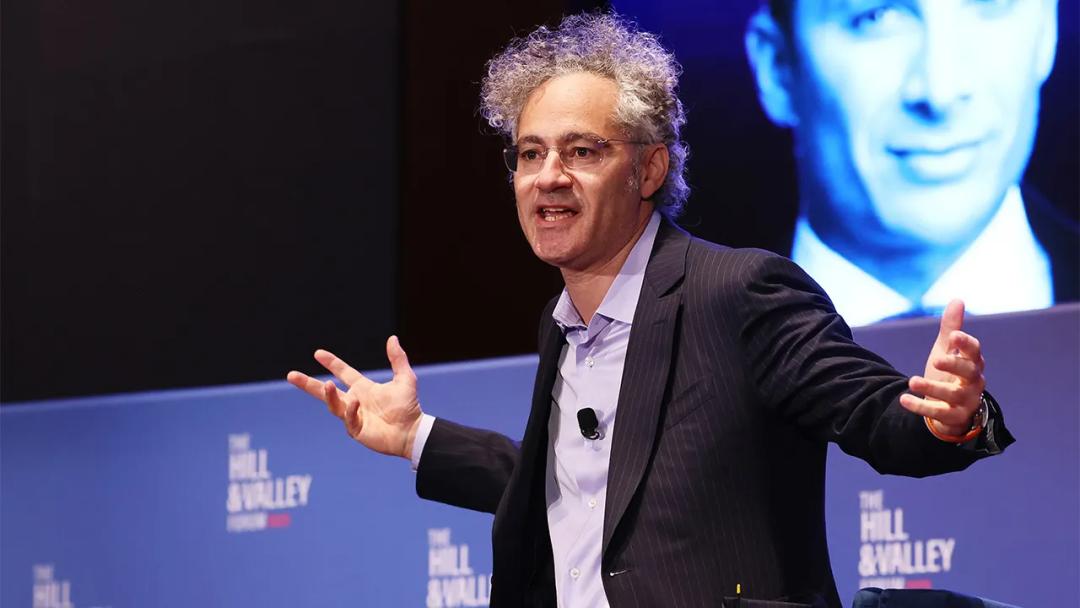
At the recent Defense Technology Summit, Palantir CEO Alex Karp sharply criticized Silicon Valley for standing against the U.S. military.
He warned that if Silicon Valley continues to grab white-collar jobs while stabbing the military in the back, it will ultimately lead to technology being nationalized.
Karp emphasized, “This is the final outcome of this path!”
Palantir currently allows clients to choose AI models from different providers, including Anthropic, OpenAI, and Google, when analyzing platform data.
Previously, an Axios report indicated that U.S. government restrictions could put Anthropic at risk of being “cut off” by Nvidia.
In theory, it could also sever its ties with cloud service providers like Amazon and Google, which also hold defense contracts.
In this game, OpenAI has quickly risen to become the substitute, with Altman eagerly offering GPT, disappointing the entire Silicon Valley.
OpenAI’s Urgent Amendments
Altman’s Candid Admission: A Poor Appearance
Today, Altman posted an internal long message, revealing some details of the collaboration with the Department of Defense.
The core content first is that OpenAI urgently patched this agreement, explicitly adding a series of legal constraints.
He particularly emphasized that this ban covers all personal privacy data obtained through commercial means, preventing AI from becoming a tool for monitoring the public.
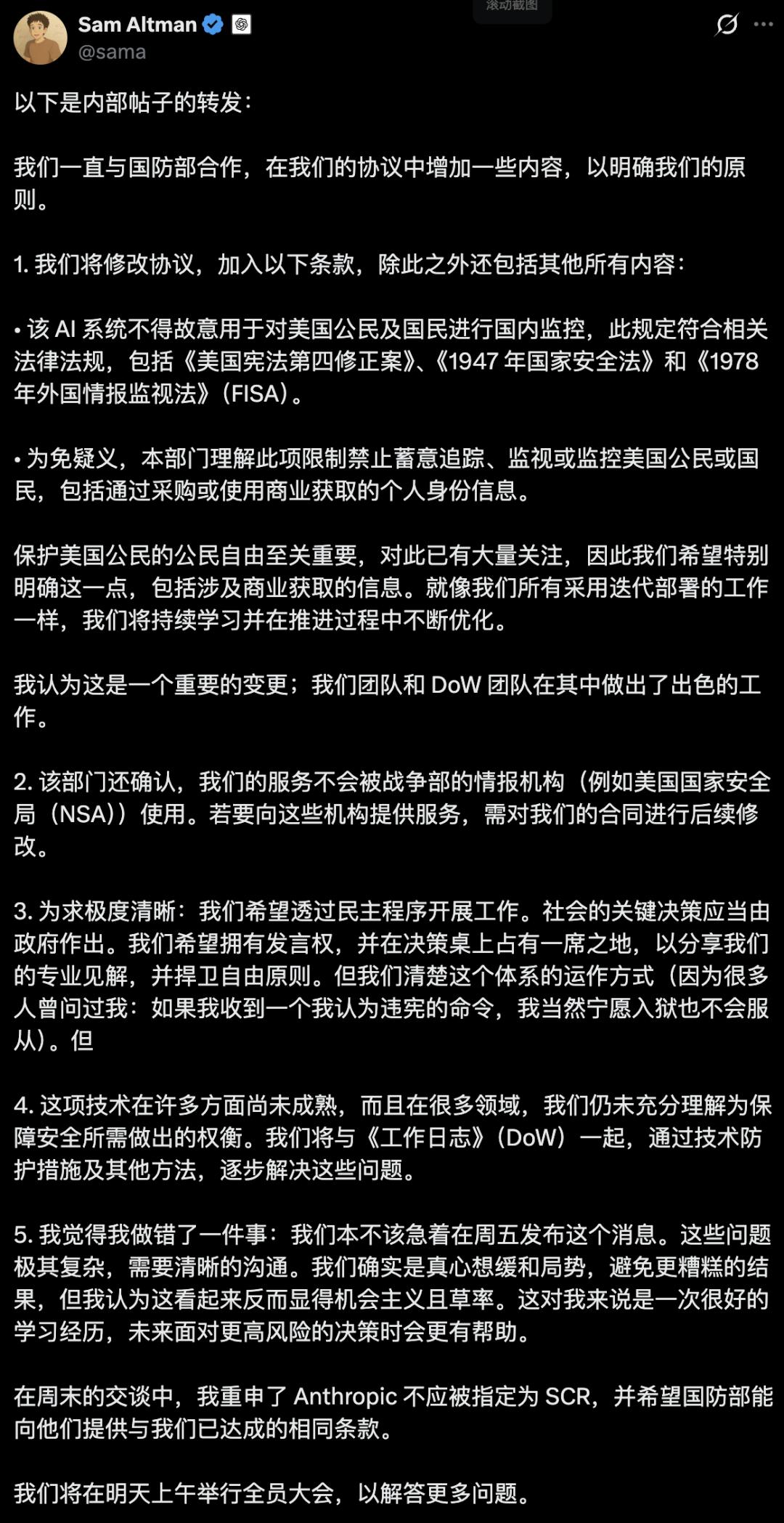
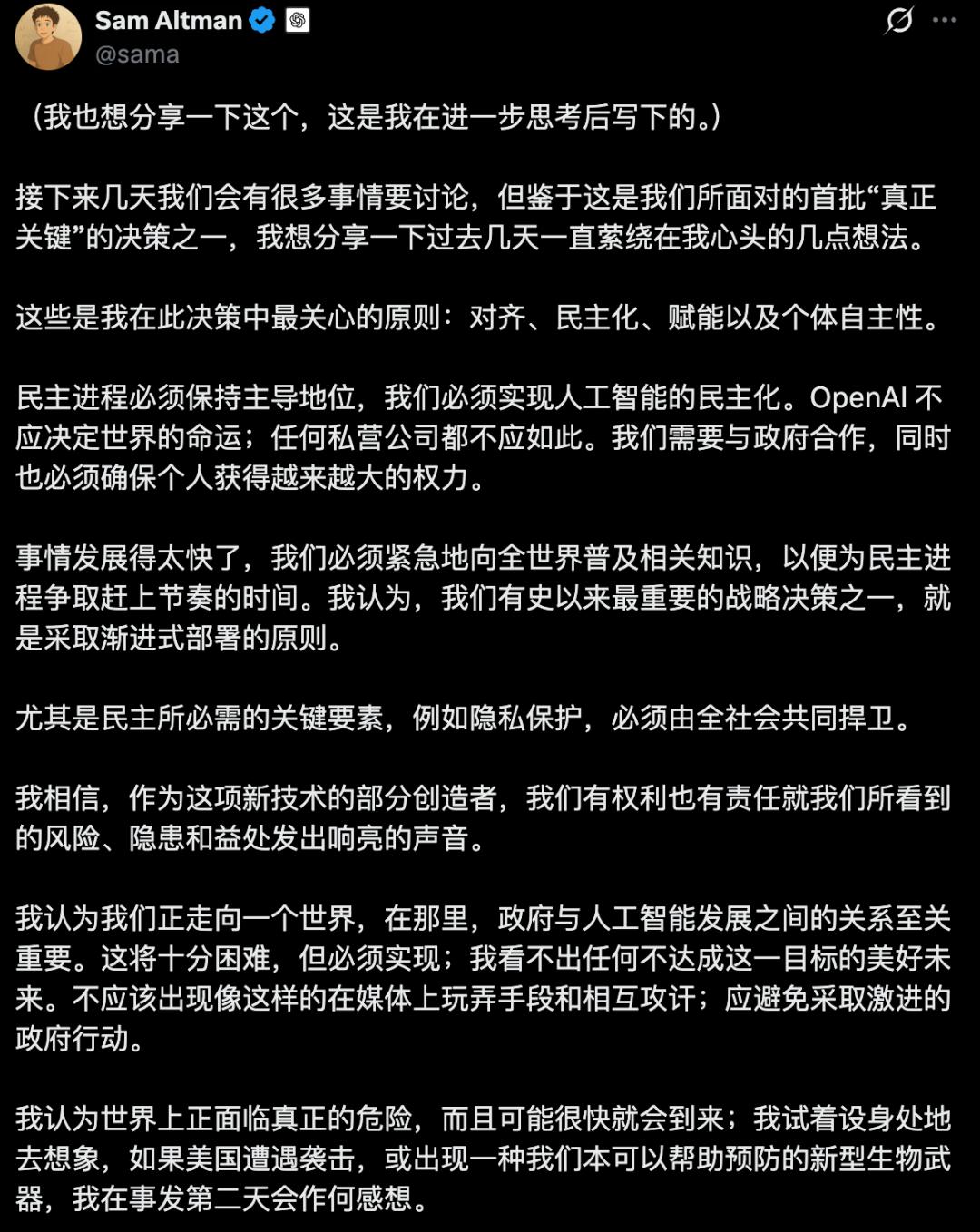
Interestingly, Altman clearly delineated the boundaries: U.S. intelligence agencies (NSA) are currently prohibited from using OpenAI’s services.
If these giants want to access GPT, they must go through a cumbersome contract modification process again.
He also admitted that the hasty announcement of the collaboration last Friday was a misstep.
In the face of such high-risk decisions, this eagerness to “rise to the occasion” looks too poor, directly shocking the entire internet.

In fact, a debate over soul and contract has erupted within OpenAI.
On Tuesday, at the company’s all-hands meeting, Altman responded to employees’ concerns about Pentagon orders in an unprecedented manner.
He candidly stated that OpenAI cannot decide how the Department of Defense specifically uses its technology—
The final action button is in the hands of Secretary of Defense Pete Hegseth.
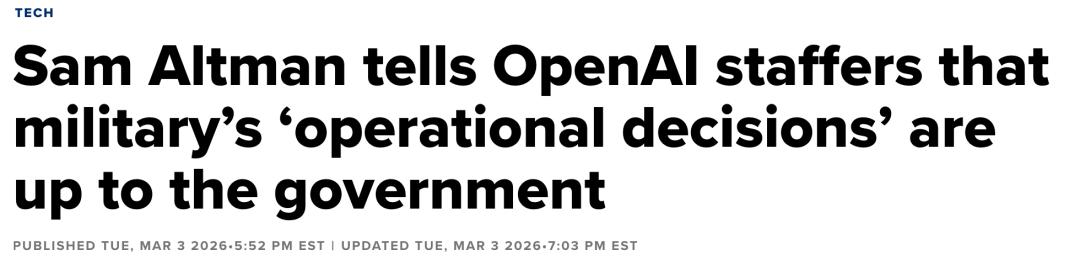
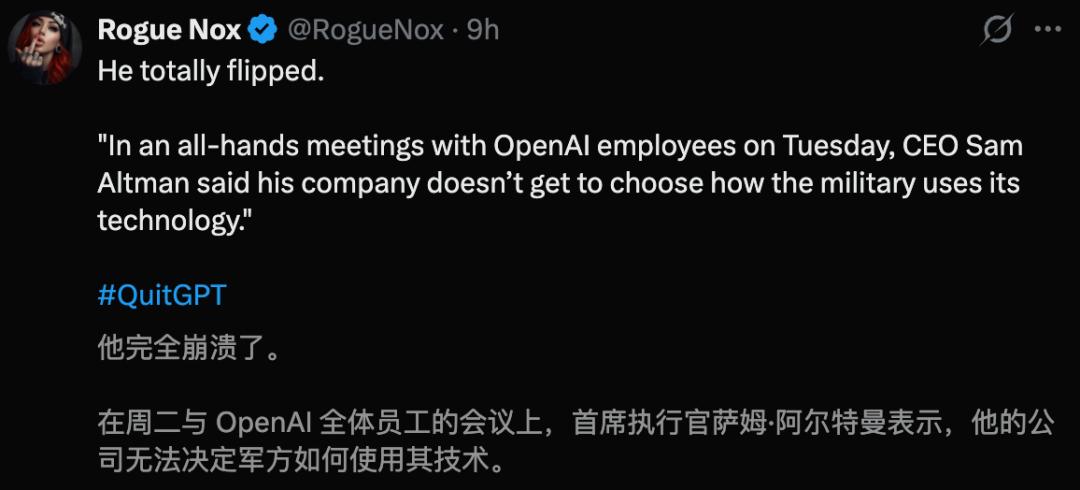
This implies that OpenAI’s commitment to “principles” is merely a facade for its employees and the public.
Collapse! 2.5 Million “Unsubscribe” from ChatGPT
Altman seeks to turn the tide but cannot stop the ChatGPT army from rampaging.
Now, the explosive “QuitGPT” movement has seen 2.5 million people join globally.
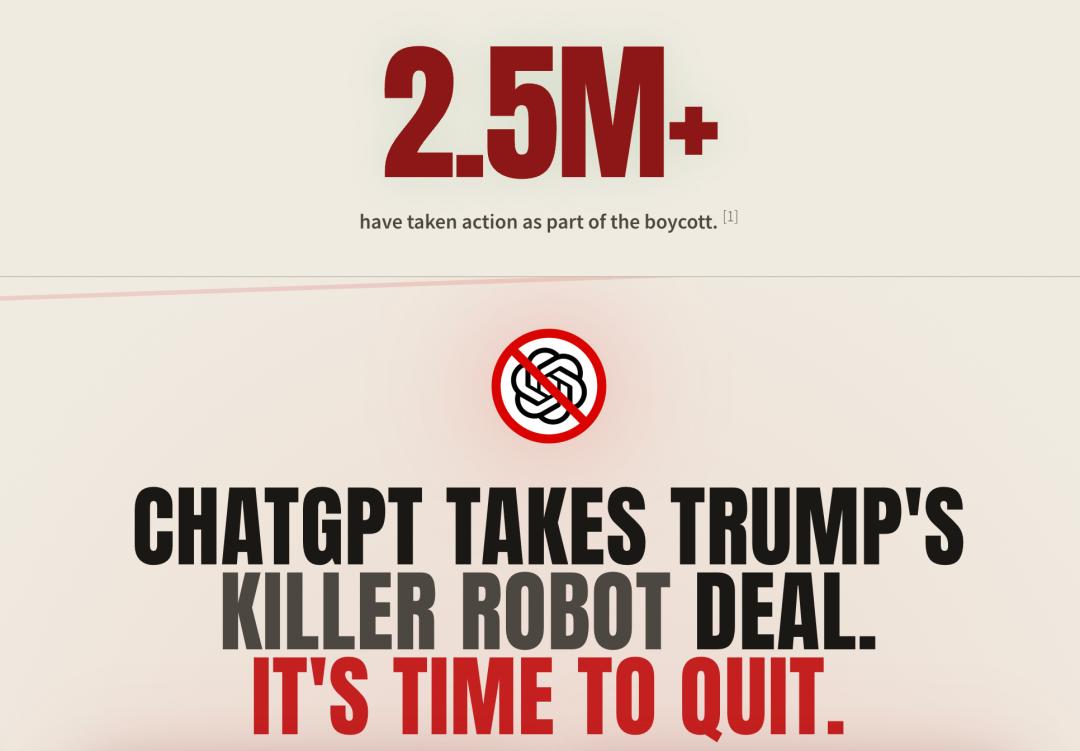
On Reddit, unsubscribing from ChatGPT has become a politically correct choice.
Recently, OpenAI announced a new round of $110 billion financing, claiming that by the end of 2025, there will be 900 million weekly active users, but the momentum of QuitGPT is not to be underestimated.
On Instagram, related posts have surpassed 36 million views, with over 17,000 people signing the boycott agreement on the official website.
New York University marketing professor Scott Galloway stated that only through “wallet voting” can these tech giants deeply tied to political power feel pain.
The $19 billion surge and 2.5 million “unsubscribes” show that the AI industry has never been so divided between ice and fire.
Anthropic’s “comprehensive victory” is a break with the old order; while OpenAI’s “urgent patch” is a helpless response under survival rules.
This epic showdown concerning power, money, and principles has just begun to reach its climax.
When the principles of technology collide with the iron plate of power, who will laugh last?
Comments
Discussion is powered by Giscus (GitHub Discussions). Add
repo,repoID,category, andcategoryIDunder[params.comments.giscus]inhugo.tomlusing the values from the Giscus setup tool.