Introduction
As Arthur C. Clarke famously said, “Any sufficiently advanced technology is indistinguishable from magic.” In the AI era, a new phenomenon known as Vibe Coding has emerged.
Recently, a controversial acquisition in the AI industry brought this trend to the forefront: the AI coding startup Windsurf was expected to be acquired by OpenAI but was instead snatched by Google DeepMind for $2.4 billion, taking its core founding team and talent. This fierce competition among tech giants for AI coding talent and technology has focused the industry’s attention on the increasingly mainstream Vibe Coding.
What is Vibe Coding?
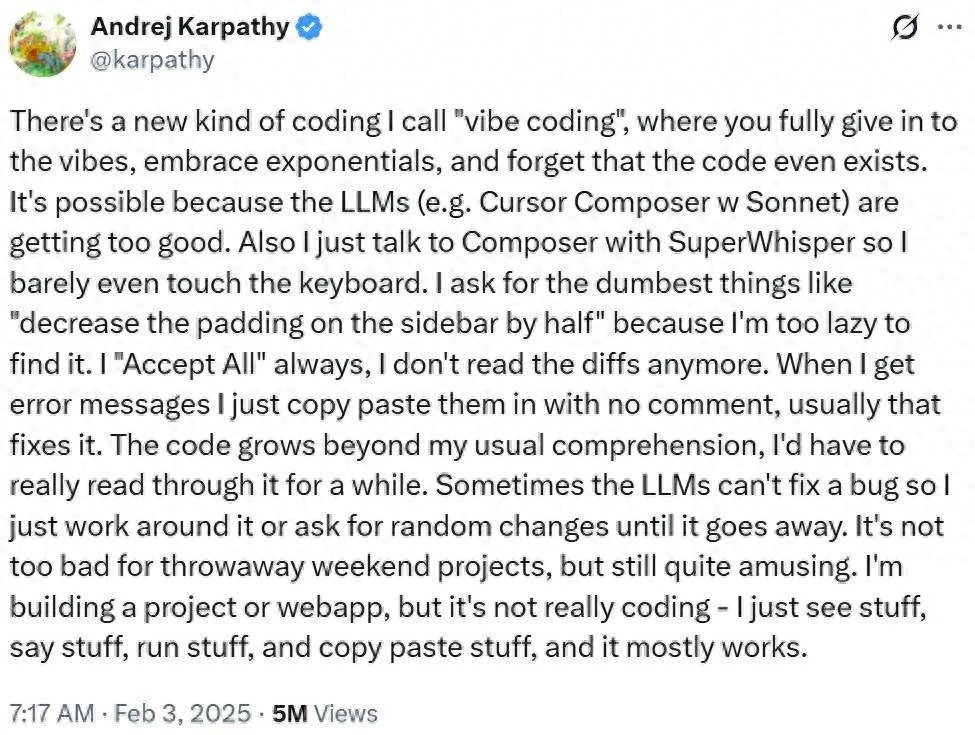
Vibe Coding was first proposed by Andrej Karpathy, co-founder of OpenAI and former head of AI at Tesla, in February 2025. It describes a new way of creation: you can almost forget the existence of code and immerse yourself in a dialogue with AI. You simply present your ideas and needs to the AI and accept its solutions; if errors occur, the AI can resolve them on its own.
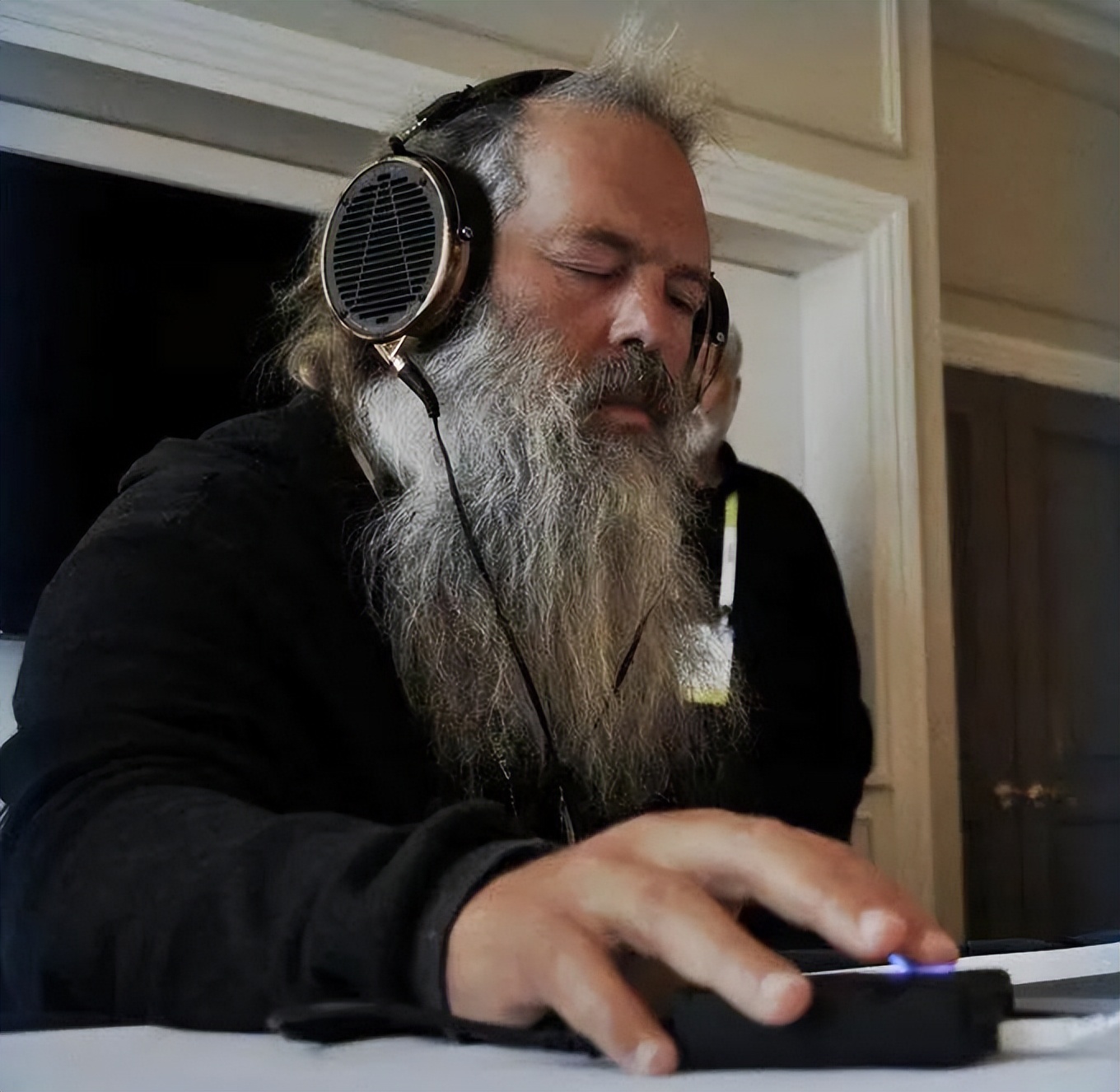
In June of this year, legendary music producer Rick Rubin collaborated with Anthropic on a book titled The Way of Code, merging the concept of Vibe Coding with the philosophies of the Tao Te Ching, emphasizing intuition, improvisation, and the free flow of creativity. A meme of Rick Rubin, wearing headphones and closing his eyes while creating, has circulated online, humorously depicting today’s Vibe Coders. Despite being a top producer for major artists like Jay-Z, Timberland, and Adele, Rubin doesn’t play any instruments, which resonates with the notion that today’s Vibe Coders need not write any code.
However, reducing Vibe Coding to merely a lower-threshold programming method or tool misses its deeper revolutionary implications. Vibe Coding fundamentally changes the paradigm of human-machine creative relationships, potentially empowering ordinary people with greater creative abilities and fulfilling needs they may not have previously recognized.
The Shift in Human-Machine Interaction
In traditional programming, the relationship between humans and machines is one of “active and passive” roles; programmers must issue precise, logically rigorous commands, and machines can only act within the boundaries of those commands and capabilities. This often leaves the command-givers as a select group of technical elites. Vibe Coding reshapes this relationship into one of “collaboration and interaction,” akin to the relationship between a director and a cinematographer, where “ordinary people can also be directors.” As long as you have a good script in mind, AI acts as a skilled and self-iterating cinematographer, responsible for translating core ideas into precise visual language—composition, lighting, and color. The dynamic process of collision and immediate adjustment between director and cinematographer is closer to the essence of human creativity.
This change is rapidly pushing “code,” once a tool exclusive to a few technical elites, into the hands of the general public. However, as everyone learns to cast “magical spells,” a core contradiction arises: as AI generates new forms of content with unprecedented efficiency and quality, we still lack a native, elegant medium to carry and share them.
The Vision of YouWare
This gap was keenly observed by Ming Chaoping, founder of YouWare. In early March 2025, he noticed many users were awkwardly sharing their creations generated by Grok 3 through screen recording, realizing a significant disconnect: the works produced by AI coding were incompatible with traditional social media platforms. This necessitated a new medium.
Building on this insight, Ming made another crucial judgment: Vibe Coding requires not only the creation of better and stronger AI models and tools but also the establishment of a community that allows creativity to flow freely and inspire one another.
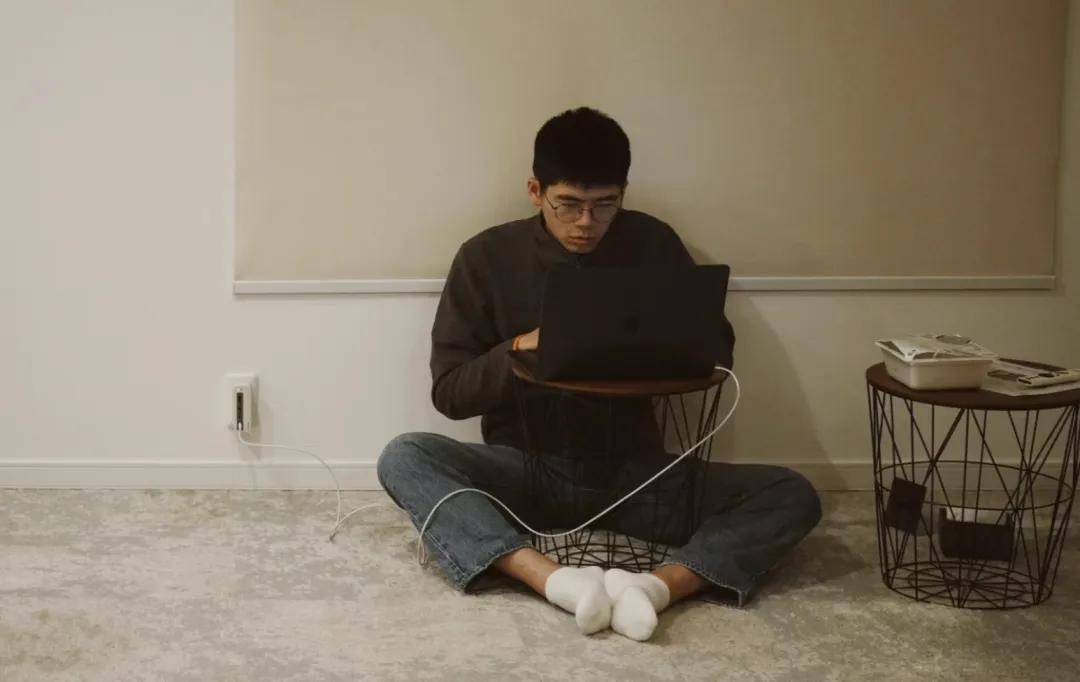
Before founding YouWare, Ming Chaoping, born in 1995 and a graduate in automation from Wuhan University, had worked at OnePlus, ByteDance, and Moonlight, spanning smart hardware, super apps with hundreds of millions of users, and AI unicorns. At OnePlus, he developed an early understanding of user needs, product aesthetics, and community building. At ByteDance’s Jianying, he combined this understanding with scientific methodologies, learning to drive rapid product iteration through data. His experiences at Moonlight, coupled with a technical background and close proximity to consumer-facing product development, enabled him to efficiently communicate with top researchers and gain a technical vision for designing current products based on future model developments.
This combination of user understanding, scientific methodology, and technical vision has become YouWare’s advantage in addressing the challenges of AI applications today.
YouWare’s Solution: Building a Community for Creators
“Alone we can do so little; together we can do so much.” — Helen Keller
Experiencing YouWare’s products reveals that every feature is designed to enable creators to realize their ideas quickly and facilitate the continuous evolution of those ideas, thus fostering a more vibrant community.
Behind model capabilities and engineering efficiency, YouWare’s approach reflects a product manager mindset.
Simple Yet Powerful
A good product should be intuitive enough that even a “fool” can use it. Ordinary users don’t need to see the underlying models, parameters, or performance scores; they only need results and experiences.
YouWare’s homepage features a simple and understated interface with a dialogue box. Users can describe their ideas in natural language within the dialogue box, generating shareable works without seeing any code.
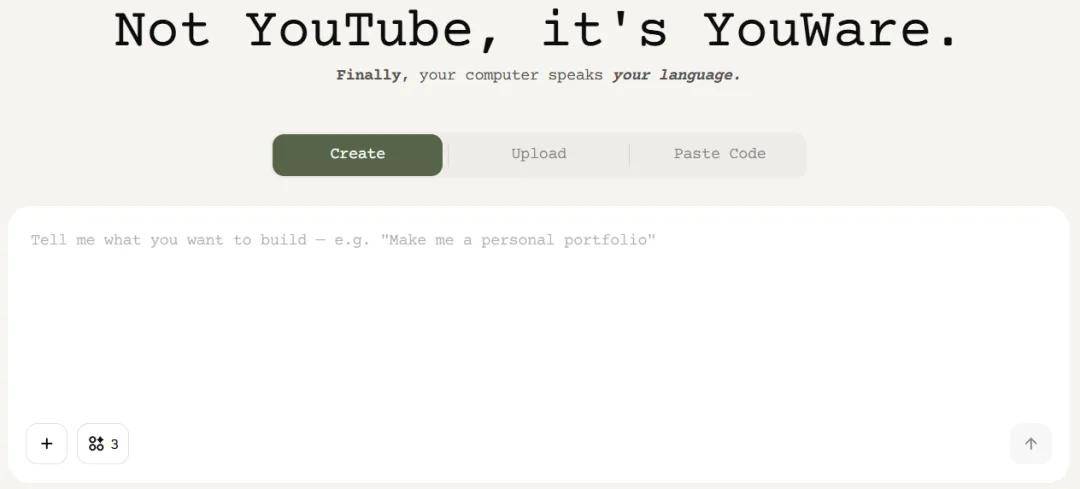
Official website: https://www.youware.com
Yet simplicity alone is not enough; it must also be powerful. With the enhancement of large model capabilities, the strength of AI agents is rapidly evolving. Can Vibe Coders create applications on the YouWare platform that also possess agent capabilities? The AI App Generator was born: users can now generate AI-driven applications with just a prompt, such as creating a “Voxel Style Image Generator.” Throughout this process, no API configuration or personal keys are required to call various mainstream models.
Currently, only Poe and Claude possess similar capabilities. Poe’s front end remains a traditional chatbot format, while YouWare can directly generate interactive applications. Claude’s Artifact can only use its own models; YouWare includes mainstream large models like OpenAI, Claude, Gemini, and DeepSeek, providing users with maximum possibilities.
Similar simplicity and power are also evident in YouWare’s recently released VS Code and Cursor plugins, which allow the popular IDE to deploy web pages with a single click. Users simply need to install the plugin from the marketplace, complete authorization, and click “Publish Project” to publish their HTML and React projects to YouWare.
By completely encapsulating the most advanced model capabilities and complex engineering details, YouWare allows users to create more freely, marking the first step in building a community.
Creating Delightful Experiences
Building products isn’t always about disruptive innovation from scratch. Often, what truly captivates users are seemingly trivial details in the experience.
When Ming discovered a Korean user using the Boost feature over 60 times in a day, it validated some of his judgments: small and interesting experiences can become users’ “delight points.”
Boost (one-click beautification) is a feature on the YouWare platform similar to Instagram filters, allowing a rough “draft” to be quickly enhanced into a more aesthetically pleasing work. It has become one of the most popular features, especially favored by users in Japan and Korea.
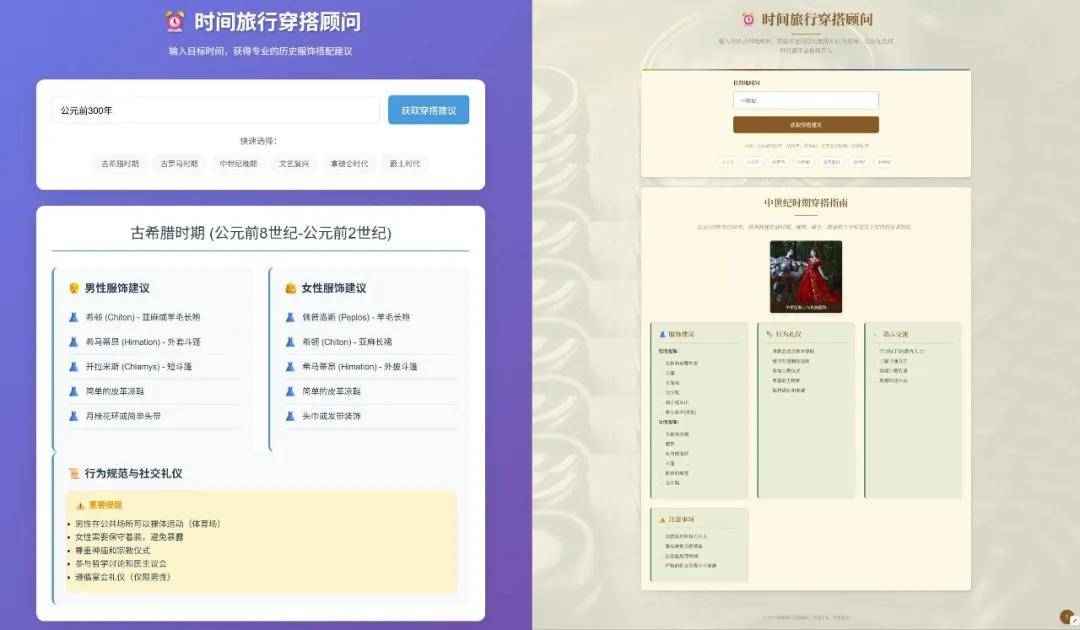
Comparison of Boost before and after for the “Time Travel Outfit Consultant”
Additionally, compared to the single like button on social platforms, YouWare employs an emoji interaction mechanism, fostering a friendlier interactive atmosphere.
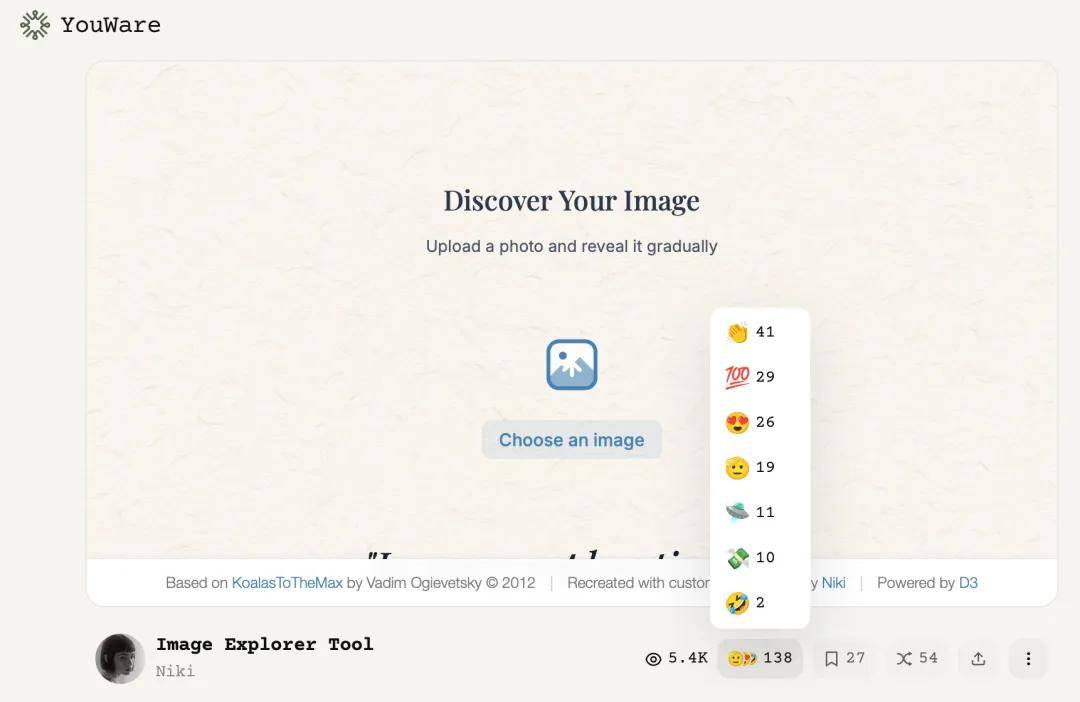
YouWare users can use emojis to express their attitudes towards projects.
Creator-Centric Approach
The YouWare team maintains high-frequency interactions with community creators. When they noticed many creators eager to develop AI-driven applications but facing challenges in obtaining API keys—due to the cumbersome application process, the risk of exposing keys, and high costs—YouWare swiftly developed the AI App Generator to address these issues and provide multiple mainstream large models, supporting both text and image generation.
This sends a clear signal to the community: YouWare is a community willing to co-create with users. When users know their voices will be heard and responded to quickly, they are more likely to engage. In just over four months since launch, YouWare has gathered 100,000 creative Vibe Coders and accumulated 300,000 projects.

Discovering Unmet Needs Through Play
“Play is the highest form of research.” — Albert Einstein
In the past month, YouWare birthed a viral case: an interactive birthday card. Previously, no one imagined a birthday card could transform into a shareable, interactive webpage. However, when creators shared it on TikTok, the video quickly went viral, leading to a chain reaction where many users began creating birthday cards, romantic letters, and anniversary cards using YouWare.
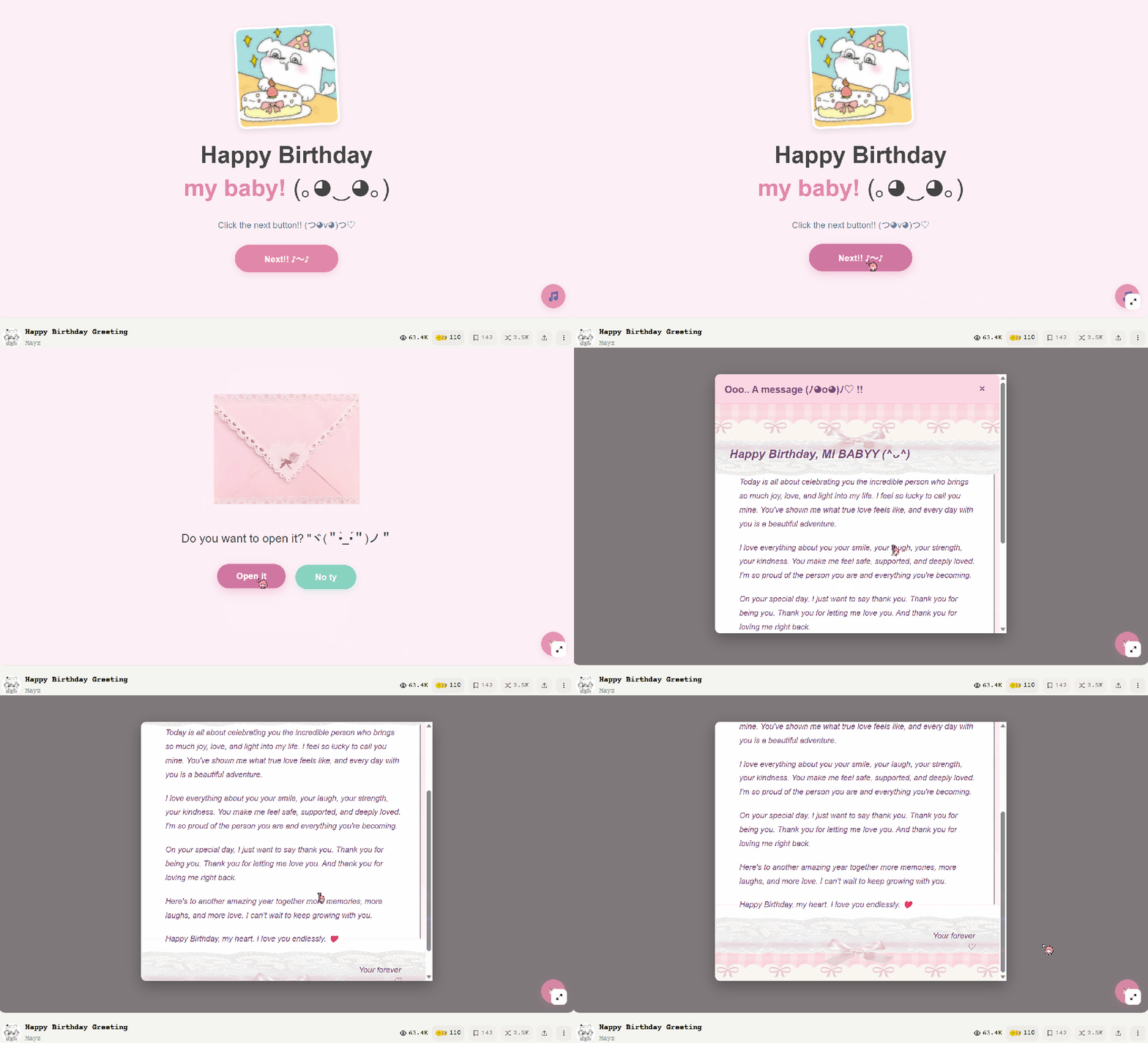
User Mayz’s birthday card: https://www.youware.com/project/pcg3u1p14y
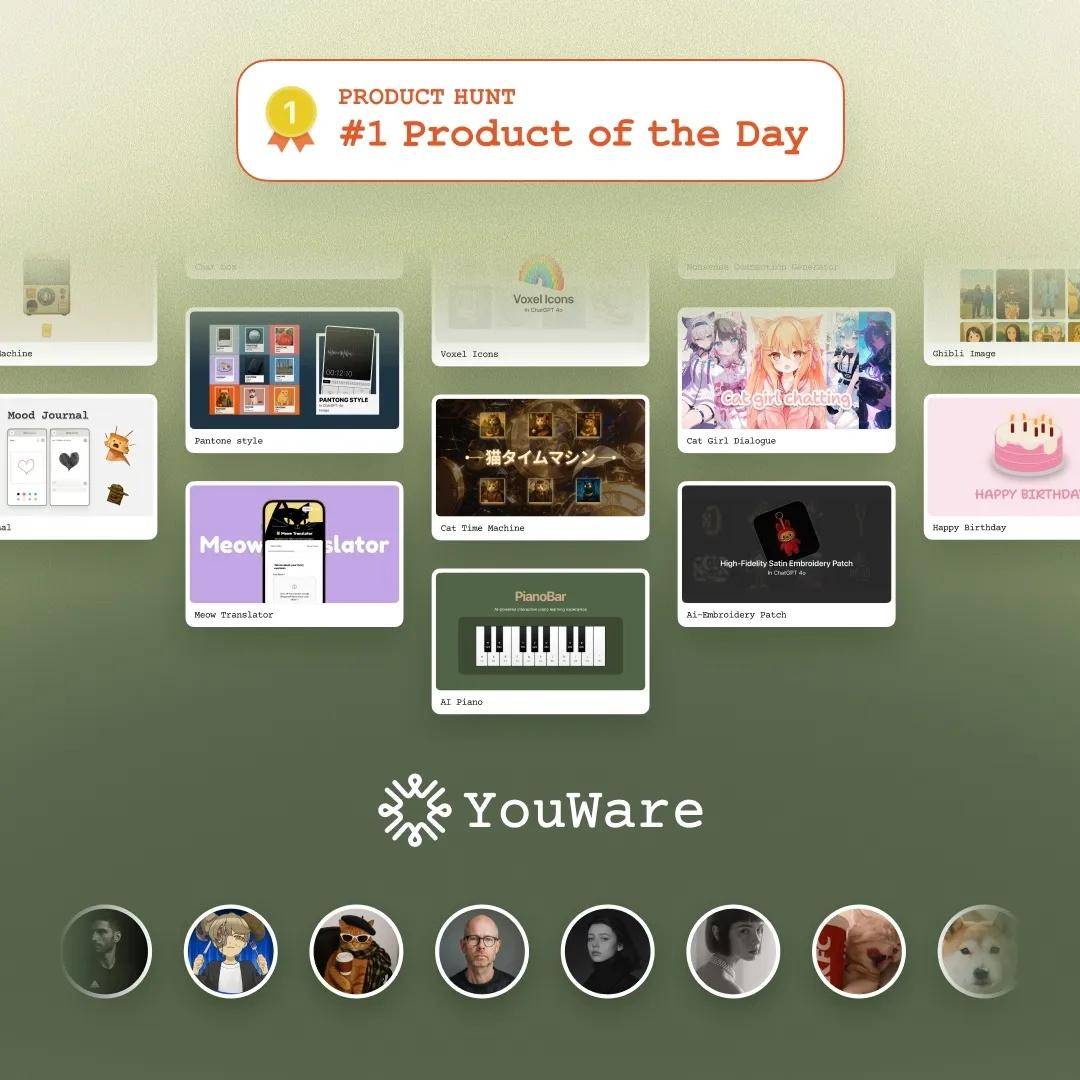
Compared to traditional programming, Vibe Coding is more accessible to ordinary users. Creating a community rich in creativity allows users to play, which essentially helps to touch upon the real needs of ordinary users; the more we respect the community atmosphere for creators, the stronger the chain of creativity to demand transformation becomes. On July 22, YouWare topped the Product Hunt daily chart, further validating the team’s grasp of the breakthrough path for Vibe Coding.
During the trial process, the machine heart created a “Future Life Visa System.”
Prompt:
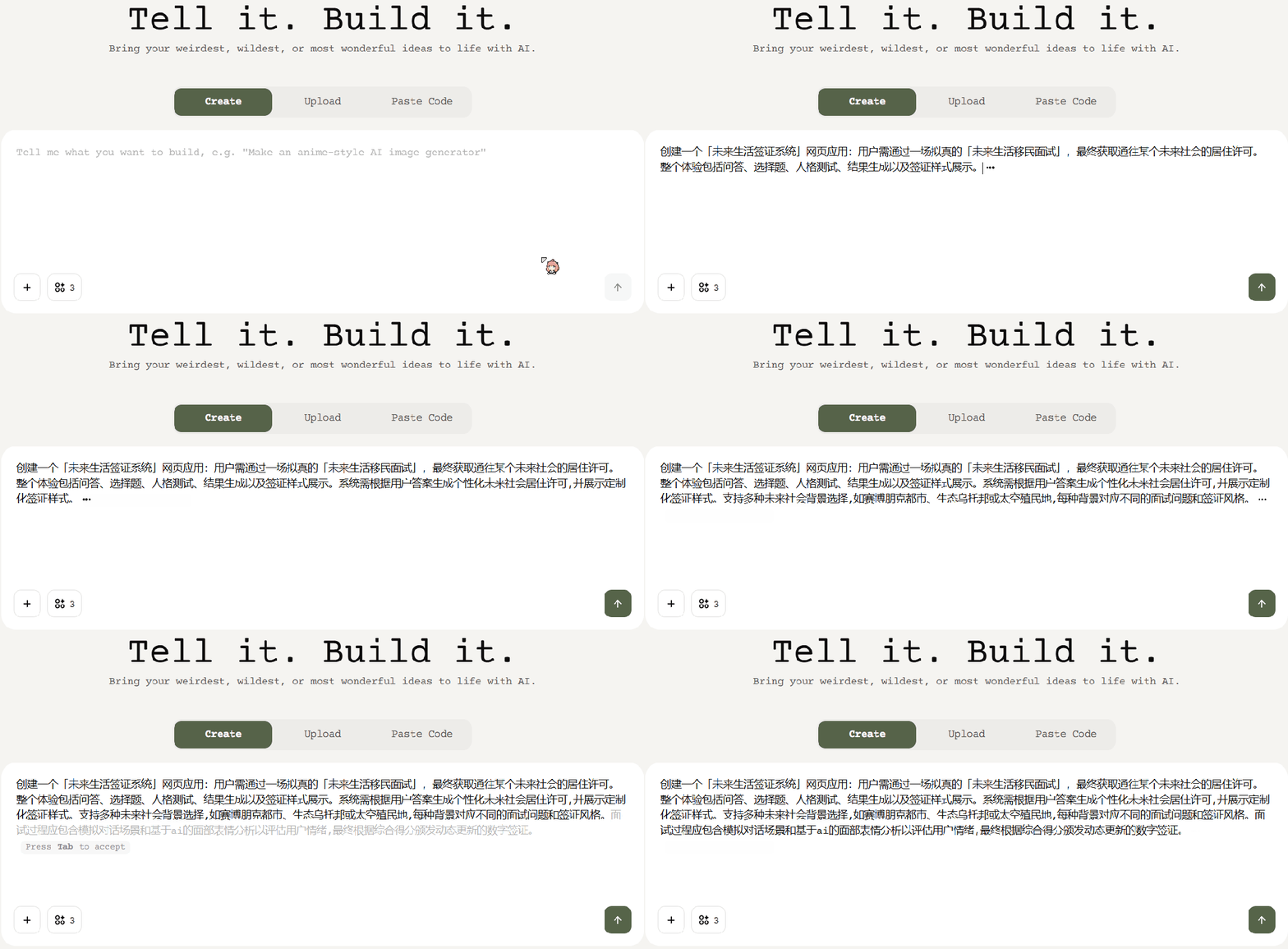
Create a “Future Life Visa System” web application: users must go through a simulated “future life immigration interview” to ultimately obtain a residence permit for a future society. The entire experience includes Q&A, multiple-choice questions, personality tests, result generation, and visa style display.
First, by clicking Create, YouWare automatically provides supplementary suggestions, which can be accepted or modified based on individual needs.
Using the original prompt, YouWare first deeply analyzed our intentions, then clearly broke our concept down into a To-Do List, allowing us to see the AI’s thought process and develop stable expectations for the final result.

After confirming the To-Do List, YouWare’s programming agent began working.

Minutes later, a fully functional prototype of the “Future Life Visa System” was born. While the prototype was usable, it appeared somewhat rudimentary; with just one click on Boost, it could be transformed into a more aesthetically pleasing product.

Comparison of Boost before and after
After completion, clicking publish leads to YouWare’s community square. YouWare offers two forms of sharing: one is a full-screen short link, suitable for direct sharing; the other is a YouWare community link, which gives the work a social attribute, allowing anyone to express opinions, comment, and suggest via emojis, and enabling other users to remix.
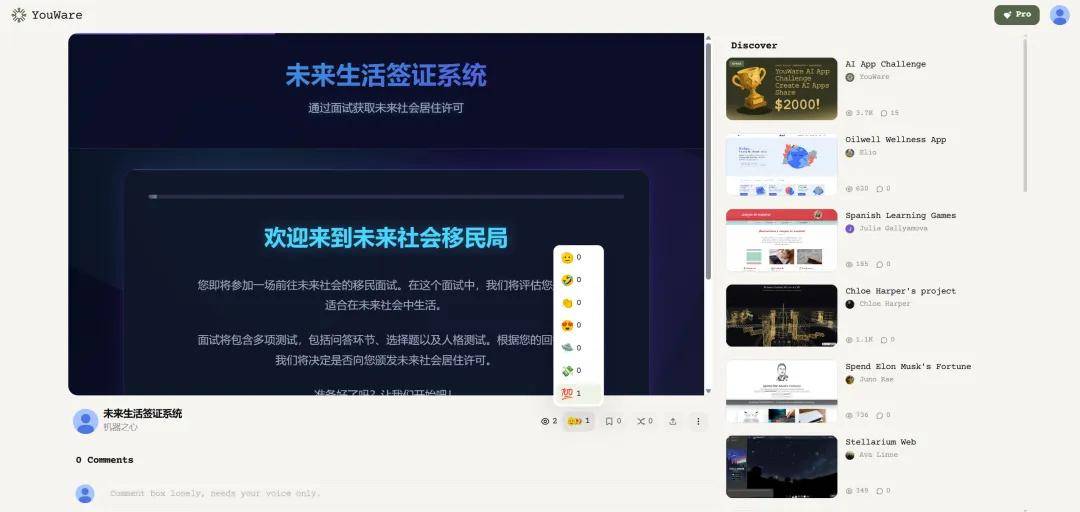
Throughout the experience, our biggest impression was that YouWare is not a cold command-execution tool but rather a fully capable, understanding, and tastefully engaging creative partner; it is simple and efficient while willing to return control to creators as much as possible.
The Second Half of AI
Product Managers Return to the Center Stage
“The sharpness of the sword lies in the hands of the wielder.” — Western Proverb
The rise of magic also requires those adept at wielding it.
In recent years, AI development has primarily focused on model parameters, with the spotlight on scientists and researchers. Now, as AI technology becomes increasingly commoditized and powerful models become accessible through APIs, a critical shift is occurring.
YouWare’s practice reveals an important trend: in the second half of AI, the ability to “apply AI technology” will become as important as the ability to “create large models.”
This necessitates a new generation of AI product managers to take on the responsibility of defining “what problems are worth solving with AI” and providing answers in the most human-centered way.
As the future approaches, it is not found in the cloud’s parameters or distant singularities; when the fervor for pure technology gradually wanes, the products that truly return to users, build ecosystems, and create value will be the most anticipated transformations brought by AI.
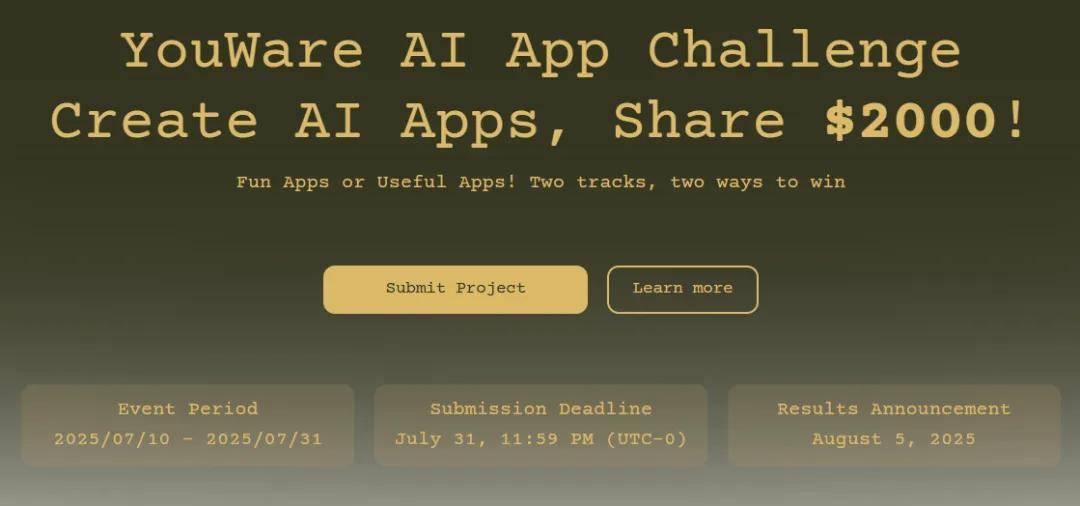
YouWare is currently hosting an AI APP Challenge, using real events to further stimulate community prosperity. Interested readers should not miss out (deadline July 31).
Comments
Discussion is powered by Giscus (GitHub Discussions). Add
repo,repoID,category, andcategoryIDunder[params.comments.giscus]inhugo.tomlusing the values from the Giscus setup tool.